
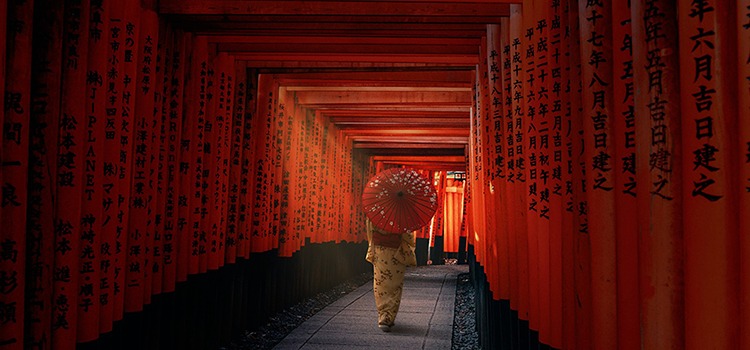
One of the most important lessons gained from long-term professional experience in Japan is that, while the country offers a high quality of life, living and working there is far from straightforward. Success—both professionally and personally—requires more than technical skills or goodwill; it demands a deep understanding of cultural frameworks that are often invisible to those who have not grown up in the country.
Among the most fundamental concepts is the well-known distinction between Honne and Tatemae. Honne refers to a person’s true feelings and intentions, while Tatemae represents the socially appropriate position expressed in public. From a Western perspective, this is sometimes misinterpreted as hypocrisy. In reality, it is a conflict-avoidance mechanism designed to preserve harmony in highly interdependent social and professional environments.
Closely related to this is Japan’s strong hierarchical culture. Behaviour, language, seating arrangements in meetings, and even everyday interactions are shaped by long-established social codes. Within this context, the concepts of Uchi and Soto—“inside” and “outside”—play a central role. Individuals simultaneously belong to multiple groups (family, company, department), and their position as uchi or soto shifts depending on context.
Importantly, Japan’s renowned level of customer service stems from this very distinction. Soto—outsiders, clients, guests—are treated with exceptional care, while members of the uchi group are expected to show restraint and humility. This dynamic often explains why visitors praise Japan so highly, while long-term residents may experience frustration once the initial “honeymoon phase” fades and deeper cultural frictions emerge.
Another relevant framework is Omote and Ura, often confused with Honne and Tatemae but conceptually distinct. Omote refers to the public-facing image or narrative, while Ura represents what remains hidden or unspoken. In professional communication, understanding the ura banashi—the “inside story”—is often essential. However, access to this level of information typically requires trust, time, and inclusion within the appropriate uchi circle. This is one reason why informal settings, such as after-work gatherings, play a critical role in Japanese business culture.
These cultural structures also have less positive dimensions. Strong group orientation and hierarchy can reinforce exclusionary attitudes, particularly toward foreigners, who may be perceived as permanent outsiders regardless of their level of integration. Failing to understand these dynamics can lead to misinterpretations, stalled negotiations, and unmet expectations.
For international professionals operating in Japan, dismissing or underestimating these concepts is a strategic mistake. Understanding them does not guarantee success, but it significantly improves the ability to interpret intentions, manage relationships, and communicate effectively. In business, diplomacy, and communication, this cultural literacy often makes the difference between surface-level interaction and genuine trust.