
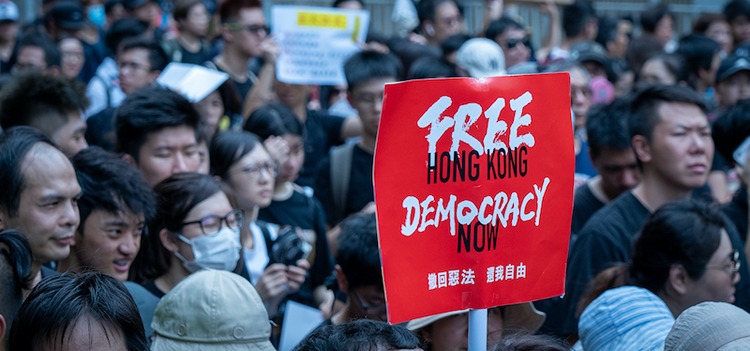
Five years ago today, this blog published an article analysing the immediate implications of the National Security Law imposed on Hong Kong on 30 June 2020. The central argument at the time was clear: beyond its legal wording, the law marked the effective end of Hong Kong’s political and institutional autonomy as it had been understood since the 1997 handover.
In 2020, that assessment was still subject to debate. Some policymakers, investors and observers argued that Hong Kong’s economic relevance would act as a buffer, that the law would be applied selectively, or that the “one country, two systems” framework would continue to operate, albeit in a more constrained form. Five years later, developments on the ground have largely settled that debate.
The National Security Law did not function as an isolated legal instrument. It became the foundation for a broader restructuring of governance, the judiciary, civil society and the relationship between the Hong Kong Special Administrative Region and Beijing. Decision-making authority has progressively shifted away from local institutions toward direct alignment with central government priorities, fundamentally altering the city’s operating environment.
From a business and economic perspective, the consequences have been gradual rather than abrupt, but no less significant. Hong Kong remains a major financial centre, yet its strategic positioning has changed. Political risk, regulatory uncertainty and reputational considerations are now integral components of corporate decision-making related to the city. Many multinational companies have responded by diversifying their regional presence, strengthening operations in other Asian hubs while maintaining a more narrowly defined role for Hong Kong.
Demographic trends have reinforced this shift. Since 2020, a sustained outflow of residents — including professionals, entrepreneurs, academics and journalists — has reduced the depth of the city’s international talent pool. This has not resulted in immediate economic collapse, but it has contributed to a measurable erosion of confidence that once distinguished Hong Kong from other major Chinese cities.
Internationally, the events of the past five years have also clarified the limits of political and legal guarantees in the absence of enforceable mechanisms. The Sino-British Joint Declaration, long cited as the cornerstone of Hong Kong’s autonomy, has proven insufficient as a practical safeguard once strategic priorities changed. This experience has resonated well beyond Hong Kong, influencing how governments and corporations assess commitments, treaties and regulatory environments in geopolitically sensitive regions.
Looking back, the article published in 2020 was less a prediction than an institutional analysis. By focusing on structural changes — legal authority, jurisdiction, enforcement mechanisms and accountability — it anticipated a trajectory that has since become evident. Once those foundations were altered, a return to the previous model was unlikely.
As of 2025, Hong Kong is no longer a political or legal exception within China. It has become a fully integrated component of the country’s governance and security architecture. For businesses, investors and institutions, the key question is no longer whether this transformation has occurred, but how to operate effectively within its new parameters.
Five years on, time has provided clarity. The moment marked on 30 June 2020 was not a temporary deviation, but a structural turning point whose consequences continue to shape the city’s role in Asia and in the global system.