
In every war, regardless of its nature or historical period, one of the most fiercely contested battlefields is information. Aeschylus famously wrote that truth is the first casualty of war, and Charles Lindbergh later observed that in times of war, truth is replaced by propaganda. Both statements remain strikingly relevant today. A clear example can be found in the parallel information war being waged by American and Chinese media across a wide range of issues.
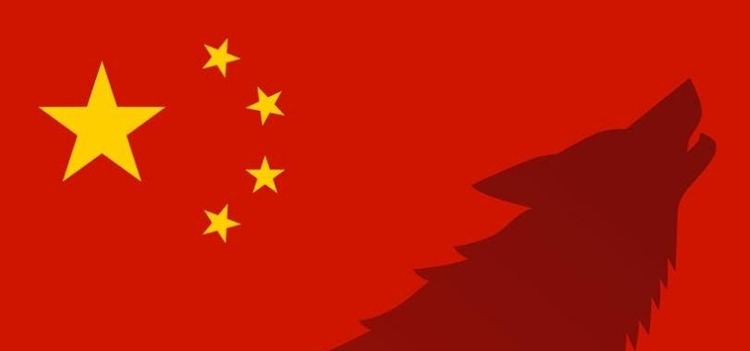
Last week, CNN journalists Ben Westcott and Steven Jiang popularized the term “wolf warrior” to describe the architects of a new and more confrontational diplomatic style emerging from Beijing. According to their analysis, these “wolf warriors” represent a sharp departure from the traditionally low-profile Chinese diplomats of recent decades. Instead of long and carefully worded statements, these officials have increasingly turned to Twitter and other social media platforms to respond directly and aggressively to criticism of China or the Chinese Communist Party.
The term itself, now widely used even within some Chinese media outlets, originates from a highly successful Chinese action film franchise. Its protagonists defend China’s interests at home and abroad with an unapologetically muscular approach — a kind of Chinese-style Jean-Claude Van Damme. While the first film in 2015 grossed over 642 million yuan, its 2017 sequel earned more than 5.6 billion yuan under the slogan: “Anyone who offends China, no matter how far away, will pay.”
An early precedent of this diplomatic shift appeared last summer, when Zhao Lijian, then a counsellor at the Chinese embassy in Pakistan, tweeted that the United States had no moral authority to criticize China over human rights while struggling with racism, income inequality and gun violence at home. Far from damaging his career, Zhao’s remarks accelerated it: he is now one of the three senior spokespersons hosting the Chinese Ministry of Foreign Affairs’ daily press briefings. Since then, Chinese diplomats worldwide have increasingly emulated Zhao’s combative tactics on Twitter — a platform that remains officially banned within China itself.
Similarly, China’s ambassador to the United Kingdom, Liu Xiaoming, has embraced the “wolf warrior” style, regularly using Twitter to counter critics of Beijing in Europe. Speaking to state media during the recent sessions of the National People’s Congress, Liu dismissed the term as a misunderstanding of China’s foreign policy, describing it instead as an “independent foreign policy of peace,” while conceding that firmness is sometimes necessary.
Predictably, the response from Beijing-aligned media was swift. On Monday, Li Yang, a journalist at the state-run China Daily, published an article titled “China Pursues Peaceful Foreign Policies”, directly attacking CNN’s analysis. Li argued that China had never pursued a low-profile diplomacy and claimed that its foreign policy had always been “committed to peace, development, cooperation and win-win outcomes” — language that closely mirrors official statements by President Xi Jinping.
Li also accused the United States of interfering in China’s internal affairs, citing Taiwan, Hong Kong, Tibet and the Uyghur issue, while revisiting recent disputes ranging from Huawei to the origins of the coronavirus and broader trade tensions. Despite what he described as an “organized campaign” against China, Li insisted that Beijing had exercised remarkable restraint and composure. He further pointed to China’s delivery of billions of face masks, hundreds of ventilators and other medical supplies to the United States as evidence of goodwill, concluding that it was Washington — not Beijing — that was acting like a “wolf warrior.”
From this perspective, both sides appear to have ample reasons for confrontation. Chinese grievances toward the United States are not unfounded, particularly when viewed against the backdrop of the political spectacle surrounding President Donald Trump. At the same time, American concerns about China’s evolving diplomatic posture — especially the “wolf warrior” strategy — are far from baseless. Rather than refuting either position, one element deserves closer attention: the role of President Xi Jinping himself.
Xi is widely perceived as a calm, cautious and strategic leader. It is difficult to believe that ambassadors and spokespersons are acting independently without his approval, particularly given the rapid promotion of figures such as Zhao Lijian. Yet Xi’s own public interventions remain measured, devoid of rhetorical escalation. This raises a crucial question: what role is Xi truly playing?
It may sound speculative, but what if Beijing is consciously deploying a “good cop, bad cop” strategy — with Xi as the reassuring statesman and his diplomats as the enforcers? This interpretation gains plausibility when viewed alongside the largest diplomatic outreach campaign in China’s modern history: so-called “mask diplomacy,” which Beijing has pursued since March with countries both near and distant, geographically and politically.
We are living through months without precedent. A severe and prolonged economic crisis looms, the global economic model of the past 25 years is eroding, and the climate crisis remains unresolved. The lockdowns may have changed individuals, but what unfolds in the coming months is likely to reshape societies far more profoundly.